Kibugu Farmers Cooperative Society | Embu County
Gikirima Factory is one of five wet mills operated by the Kibugu Farmers Cooperative Society (FCS) in Embu County, on the southeastern slopes of Mount Kenya. Located near Gicherori in Manyatta Division, the factory serves smallholder farmers cultivating coffee at high elevations of 1,800–1,900 meters above sea level.
Kibugu FCS represents not only Gikirima, but also the Gicherori, Kathakwa, Ndunduri, and Ngerwe factories. The cooperative’s business affairs are managed by an elected board and a professional team oversees daily operations. Seasonal labor expands during peak harvest, reflecting the cooperative’s role as both an economic and community hub.
The farmers supplying Gikirima with coffee benefit from an exceptional terroir. The region’s rich volcanic soils provide excellent nutrient density and drainage, supporting slow cherry maturation and high cup complexity.
Annual rainfall averages around 2,000 mm, distributed across bimodal rainy seasons, which ensures consistent flowering and fruit development. The combination of high altitude, ample rainfall, and moderate temperatures allows cherries to ripen slowly, building the bright acidity and layered sweetness Kenya is known for.
Farmers that provide coffee to Gikirima predominantly grow SL28 and SL34, two of Kenya’s most celebrated varieties. These cultivars are prized for their resilience in high elevations and their ability to express complex acidity, intense fruit character, and structured sweetness in the cup.
The cooperative follows Kenya’s dual harvest cycle. The Main crop is in October–December and the Fly/early crop is in April–July (smaller volumes). Cherries are selectively handpicked at peak ripeness, ensuring only dense, fully mature fruit enters the processing stream.
At Gikirima, meticulous washed processing is central to quality. Processing begins with cherries being floated and hand-sorted to remove underripe or defective fruit. Clean river water feeds the pulpers, where the outer fruit is removed. Floating beans are removed while denser cherries continue forward.
Once sorted, beans are fermented overnight to break down mucilage. The coffee is repeatedly moved through channels, where density sorting further refines quality - heavier beans move slowly, separating from lower-density lots.
Gikirima also takes good care to ensure that all wastewater is treated in soak pits to prevent contamination of local waterways
After washing, parchment coffee is sun-dried on raised beds, carefully monitored and covered during rain or intense sun, until reaching an optimal 10–12% moisture. This traditional Kenyan washed process enhances clarity, acidity, and structure in the final cup.
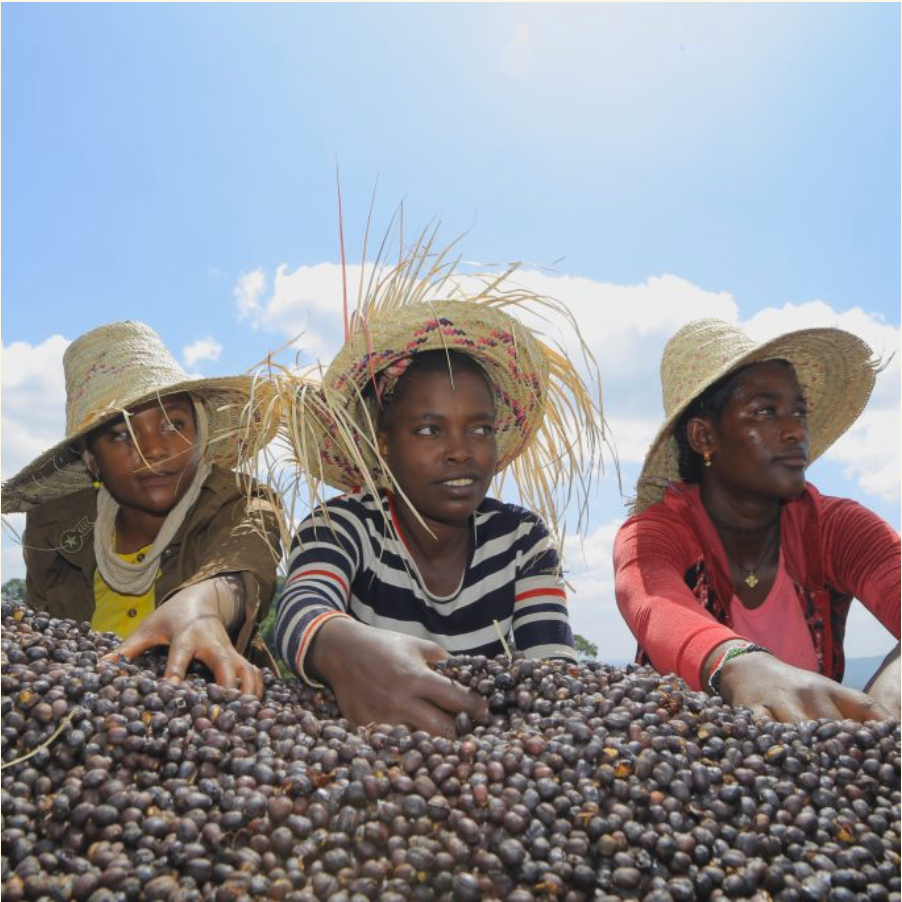
Kenya and Ethiopia may share a border, but their coffee industries have followed vastly different paths since the beginning. While coffee is native to Ethiopia, it wasn’t introduced to Kenya until 1893, when French missionaries planted the first trees in the Taita Hills.This Ethiopia Maji represents an opportunity to experience new profiles, stepping away from the more common coffee-growing areas, and guarantees a well-defined origin and a careful process. It’s a solid addition for those who value the authenticity and inherent quality of Ethiopian coffees. Coffee is typically intercropped with maize, barley, wheat, beans, and other crops that sustain the farmers' families.